Decoy for SWD
Claire Winslow, PhD student
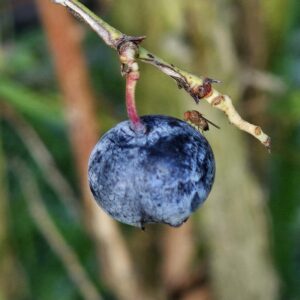
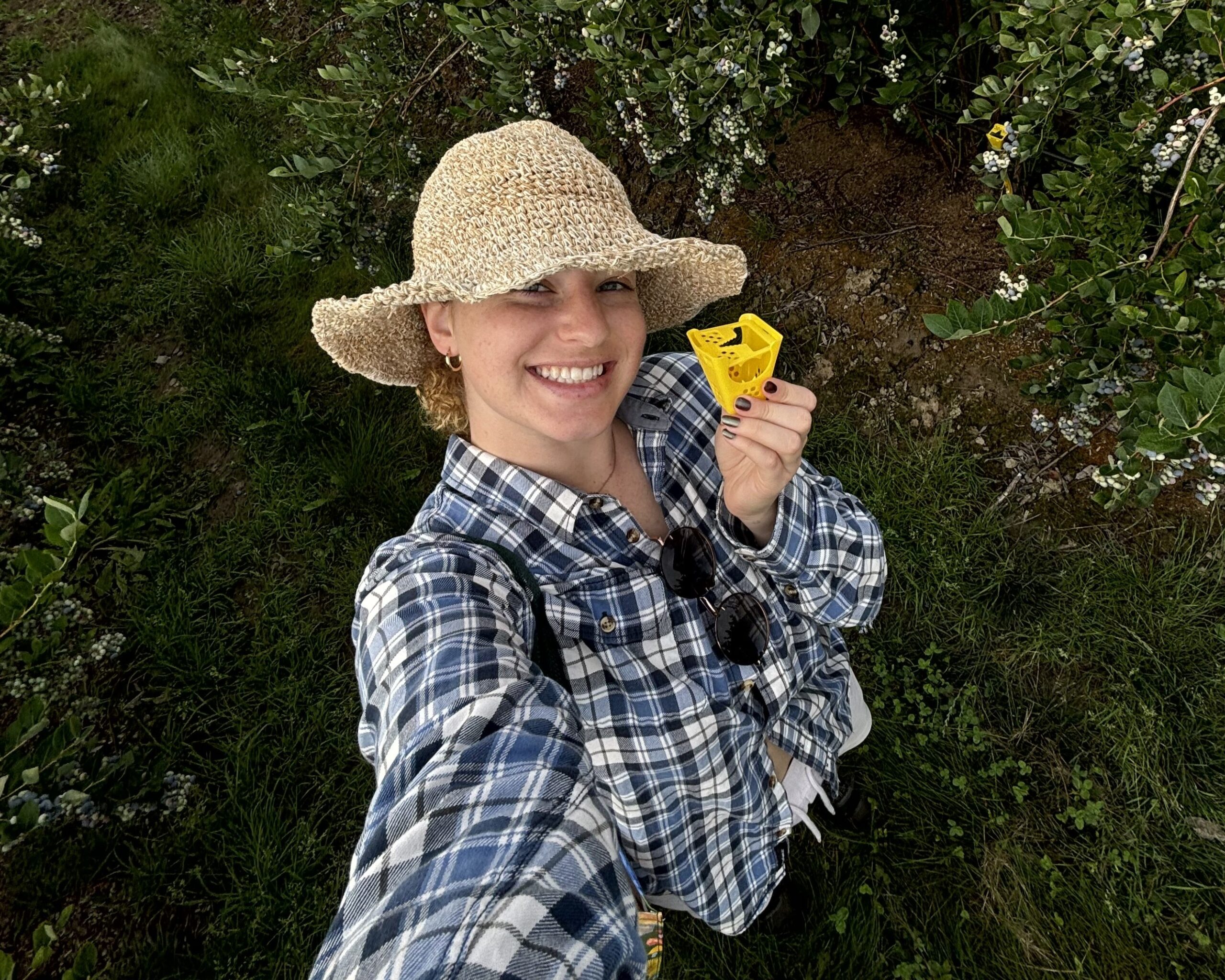
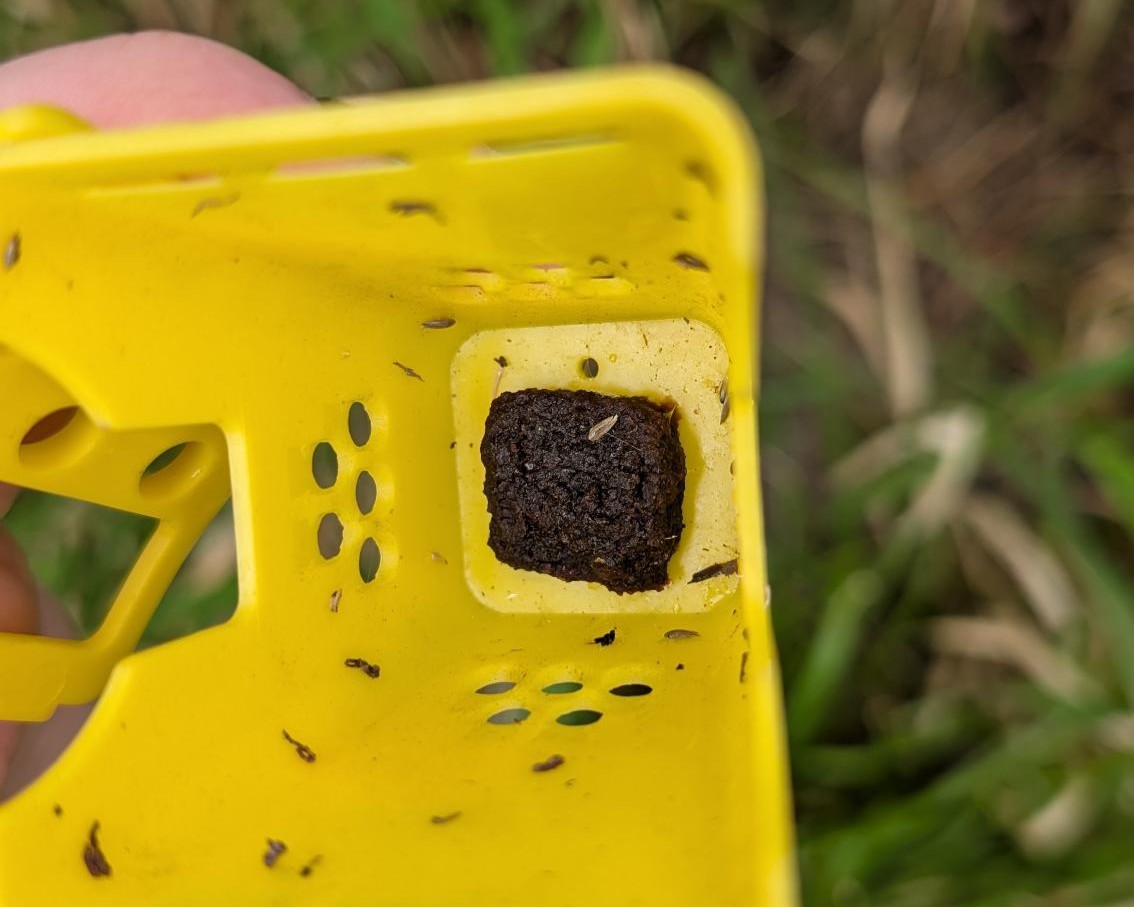
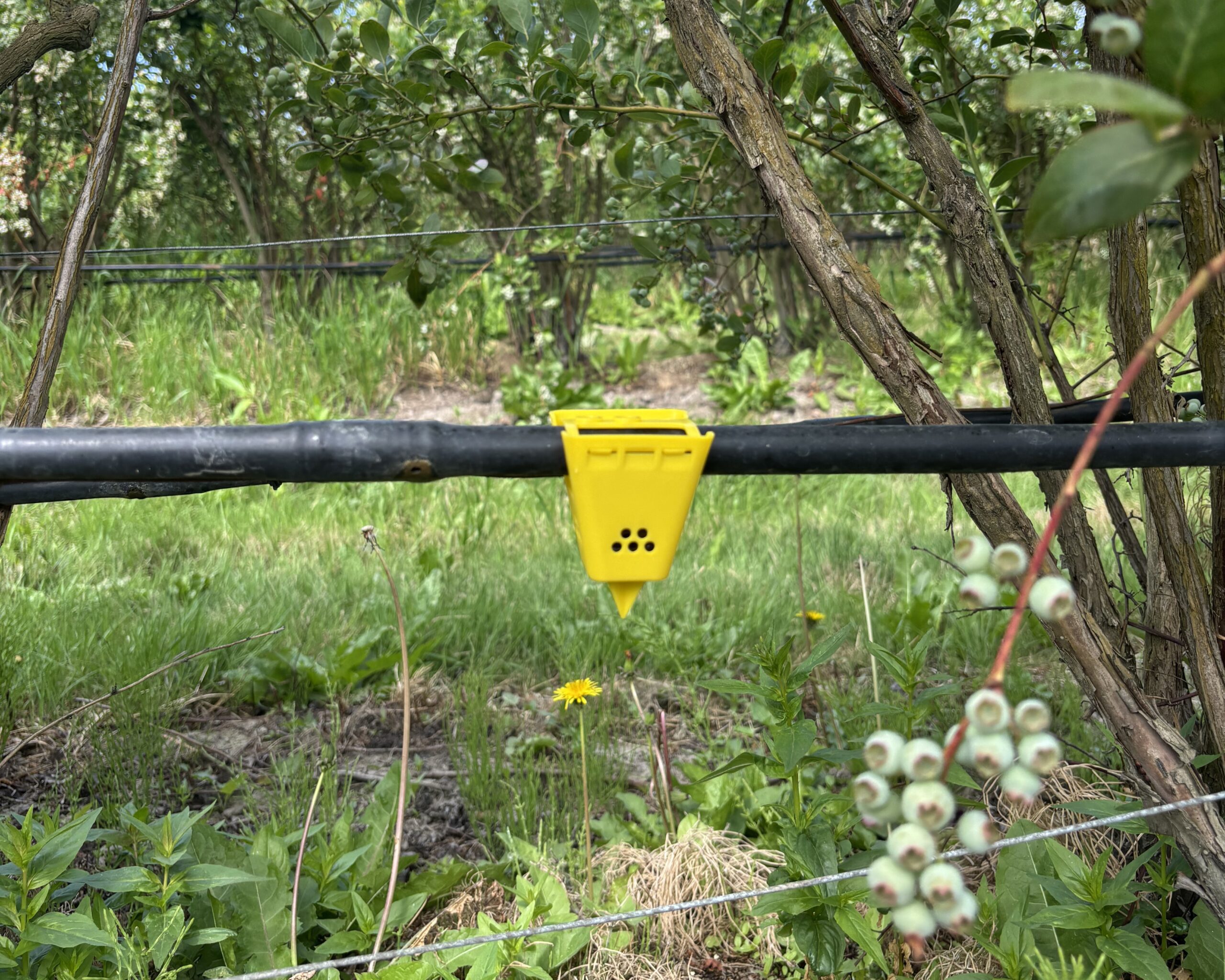
The spotted wing drosophila (SWD) is an invasive vinegar fly that infests soft-skinned fruit. Since its emergence in North America over a decade ago, overreliance on broad spectrum insecticides has led to insecticide resistance and secondary pest outbreaks, so alternative products, such as Decoy, are under evaluation. Decoy is a non-chemical attractant bait, that is housed inside a cage-like dispenser that can be easily hooked onto above-ground irrigation tubing within a commercial field. When irrigated, the cherry-based bait releases attractant volatiles into the air, distracting SWD from laying eggs in the actual fruit and lessening overall fruit damage in a commercial field. Successful trials in California and Oregon displayed significant reduction of SWD fruit infestation in laboratory and field settings. Through our lab and field trials, we discovered that irrigation rate was an important factor to the product’s success in disrupting SWD’s host-finding cues.
For more information:
Presentation:
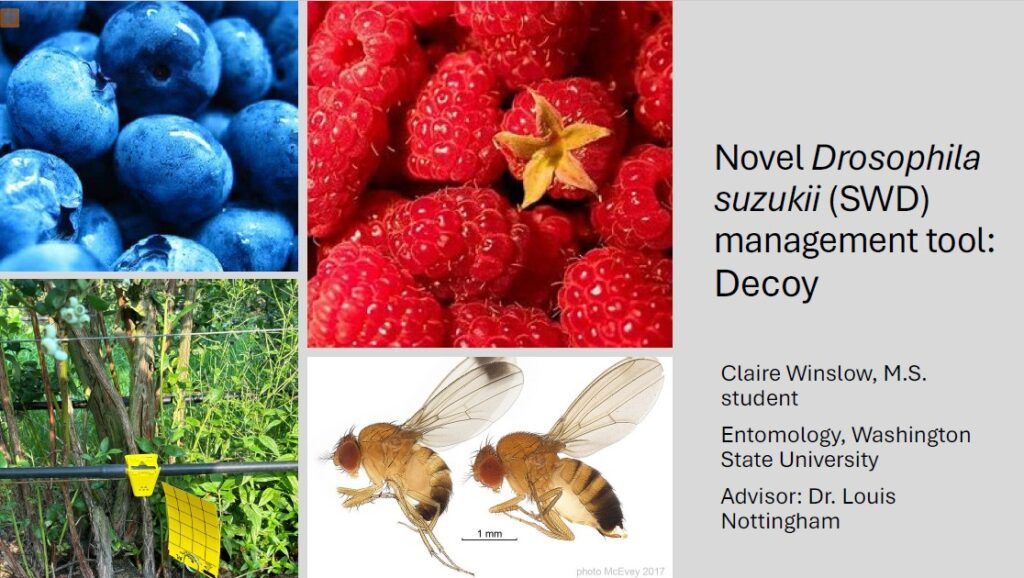
Slideshow from the 2025 PNWIMC Annual Meeting in Portland, Oregon by Claire Winslow (PDF).
Kaolin for Blueberry Aphids/Scorch Virus
Claire Winslow, PhD student
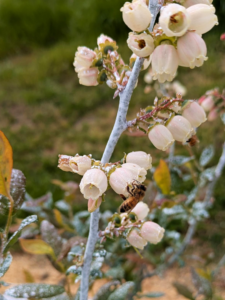
Aphids are significant phytophagous blueberry pests in Western Washington, because they can be an efficient vector of blueberry scorch virus. Blueberry scorch virus typically leads to plant mortality, and symptoms can take years to appear, creating a dangerous situation for growers without an effective aphid management system in place. Within commercial fields, aphids are typically treated with broad-spectrum insecticides in the spring; however, their population peaks during blueberry bloom when it is challenging to make pesticide applications due to the presence of pollinators. For organic growers, options for chemical management products are even fewer than conventional, further complicating the situation for organic aphid management.
Surround WP (kaolin clay), is a repellent that can be utilized during just before and during bloom, due to its lower-risk to pollinators. When kaolin is applied to plants, it forms a distinguishable white, dusty film, irritating insect exoskeletons and reflecting UV light (causing insect water loss and disorientation). Kaolin also provides sunburn protection and heat stress mitigation for plants without significantly impacting plant productivity. Kaolin has been shown to successfully manage aphids and related insect pests on blueberries and other crops, but it is unknown if it can effectively manage blueberry aphids in Washington State. In our two-year field trial, we are examining how different timings of kaolin applications impact aphid colonization, beneficial arthropod communities, pollinators, and plant productivity.